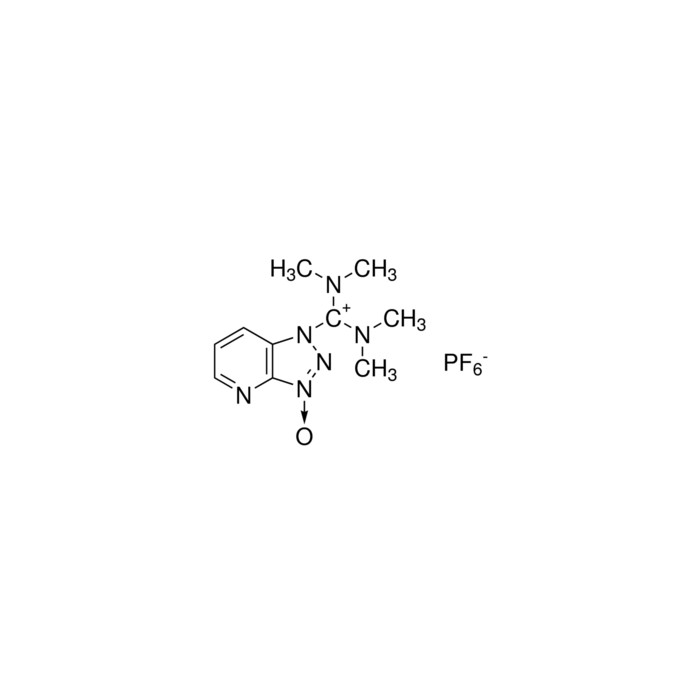
About HATU Chemical
SYNONYMShatu,2-7-aza-1h-benzotriazole-1-yl-1,1,3,3-tetramethyluronium hexafluorophosphate,o-7-azabenzotriazol-1-yl-n,n,n',n'-tetramethyluronium hexafluorophosphate,o-7-azabenzotriazol-1-yl-n,n,n,n-tetramethyl uronium hexafluorophosphate,2-3h-1,2,3 triazolo 4,5-b
Optimal Storage and HandlingTo maintain the purity and effectiveness of HATU, it is essential to store the liquid reagent away from any moisture sources. Exposure to moisture can compromise its performance, so ensure containers are tightly sealed and kept in a controlled environment. Proper handling techniques not only extend shelf life but also guarantee consistent results during chemical syntheses.
High-Efficiency Peptide SynthesisHATU stands out in the field of peptide coupling due to its remarkable solubility in acetonitrile and its advantageous melting and refractive properties. These characteristics promote rapid reaction rates and reproducibility, making HATU a preferred choice for laboratories and industrial applications requiring efficiency and purity in their synthesis processes.
FAQ's of HATU Chemical:
Q: How should HATU liquid be stored to ensure its stability?
A: HATU should be kept away from moisture in tightly sealed containers. Storing it in a dry, cool environment helps maintain its chemical stability and prevents degradation.
Q: What is the primary use of HATU in chemical synthesis?
A: HATU is predominantly used as a coupling reagent in peptide synthesis due to its high efficiency and compatibility with acetonitrile as a solvent.
Q: When is HATU most effectively utilized during the peptide synthesis process?
A: HATU demonstrates optimal results when employed during the activation step of peptide bond formation, especially in environments where acetonitrile is used as the primary solvent.
Q: Where can I source high-quality HATU in India?
A: Reputable manufacturers, suppliers, and traders across India provide quality-assured HATU, ensuring it meets industry and research-grade standards.
Q: What is the process for using HATU in synthesis applications?
A: HATU is typically dissolved in acetonitrile, after which it is added to the reaction mixture to facilitate efficient peptide coupling. It remains insoluble in water, so acetonitrile or compatible solvents are essential for optimal performance.
Q: What are the main benefits of using HATU over other coupling reagents?
A: HATU offers rapid reaction rates, high yields, and superior purity, making it advantageous for researchers seeking consistent and reliable peptide bond formation.





 Send Inquiry
 Send Inquiry