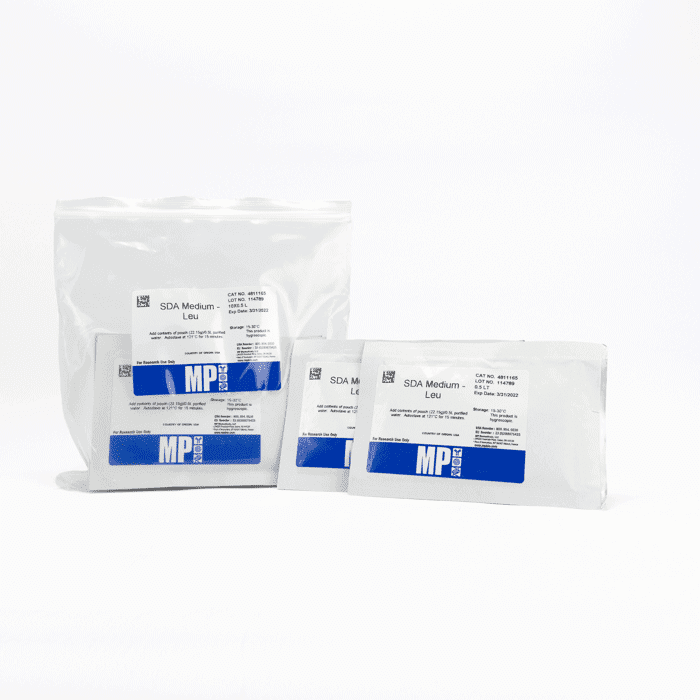
About SDA medium -LEU
Single dropout formulation (without Leucine) of Synthetic Defined (SDA) Yeast Media with agar includes all necessary components for selective growth of Saccharomyces cerevisiae
Specialized for Molecular BiologySDA medium -LEU meets the exacting standards of research laboratories. Its lack of leucine makes it perfect for experiments requiring selective growth of auxotrophic strains, supporting advanced genetic and molecular biology research goals.
Optimal Storage and LongevityTo maintain its high purity and efficacy, SDA medium -LEU should be stored at a cool, dry place, in line with manufacturer recommendations. This careful storage ensures a stable shelf life of up to 1 year, maximizing utility and reducing wastage.
FAQ's of SDA medium -LEU:
Q: How should I prepare SDA medium -LEU for use in the laboratory?
A: Simply pour the required volume of the ready-to-use liquid SDA medium -LEU into sterilized culture vessels under aseptic conditions. The medium is pre-formulated to facilitate immediate use without additional dissolution or supplementation.
Q: What applications is SDA medium -LEU suitable for?
A: This medium is specifically designed for studies involving auxotrophic microorganisms in molecular biology. It allows selective cultivation of strains lacking the ability to synthesize leucine, aiding genetic manipulation and metabolic evaluation.
Q: When does the product expire, and how can I ensure maximum shelf life?
A: SDA medium -LEU has a shelf life of 1 year from the date of manufacture. To maximize longevity, store the bottles in a cool, dry environment away from direct sunlight and sudden temperature fluctuations.
Q: Where is SDA medium -LEU manufactured and supplied from?
A: The product is manufactured, supplied, and traded within India by reputable companies specializing in molecular biology reagents, ensuring both local availability and consistent supply quality.
Q: What process should be followed for proper disposal after use?
A: After use, dispose of the medium as biological waste in accordance with institutional and local environmental guidelines. Autoclaving prior to disposal is recommended to deactivate any potential biohazards.
Q: How does the absence of leucine benefit my research?
A: Omitting leucine from the medium enables researchers to conduct experiments requiring selective pressure for leucine auxotrophy, which is crucial for genetic selection and metabolic pathway analysis.






 Send Inquiry
 Send Inquiry